Discover
Interviews, a look at how the work really happens, and a short prototype of the riskiest idea. You get scope, budget and a roadmap in writing.
1–3 weeksMove critical old systems forward without stopping the business.
How we work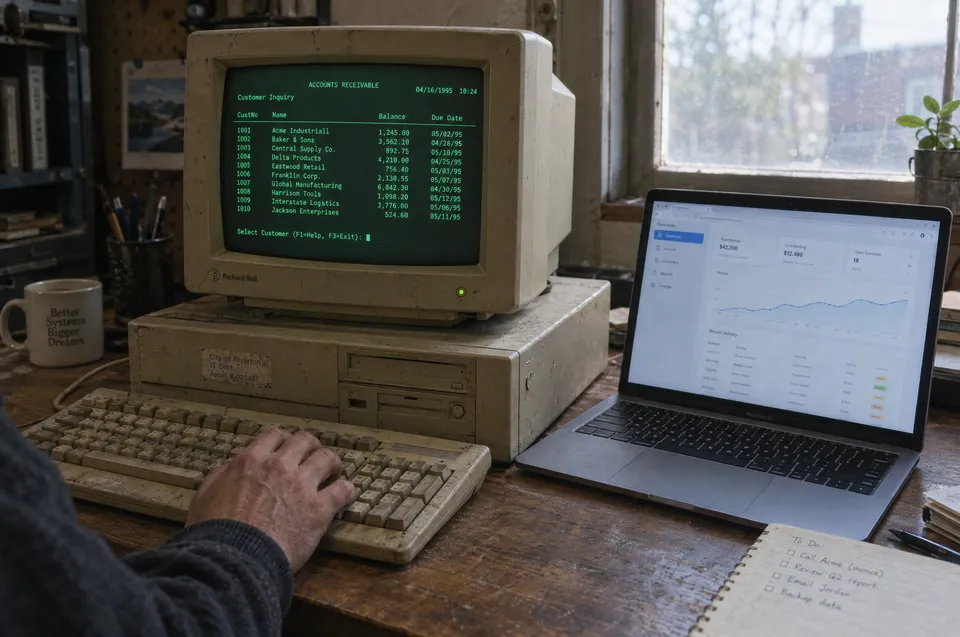
Some of the most valuable software in Los Angeles runs on a machine nobody wants to reboot. We modernize those systems step by step, keeping the business logic that works and replacing what holds you back.
We begin by reading the old system carefully — code, database, reports and the habits people have built around it. The goal is to understand what it really does before deciding what to keep.
Rather than a risky big-bang rewrite, we usually replace a legacy system in slices: wrap it with an API, move one module at a time to modern software, and migrate data with checks that prove nothing was lost.
The result is a system your team can maintain, that runs securely in the cloud and that new employees can learn in days instead of months.
Every engagement is scoped to your needs. These are the pieces we deliver most often.
Interviews, a look at how the work really happens, and a short prototype of the riskiest idea. You get scope, budget and a roadmap in writing.
1–3 weeksPaper sketches, wireframes and clickable prototypes tested with real users, then a visual design system developers can build from.
2–4 weeksTwo-week sprints with a working demo at the end of each one. You see progress in the software, not in a slide deck.
6–14 weeksA careful release, training for your team, monitoring from day one — then a support plan that keeps the software improving.
OngoingYes — this is the most common situation we see. We reconstruct how the system works from code, data and interviews with the people who use it.
Rarely. Incremental modernization delivers value sooner and carries far less risk. We recommend a rewrite only when the old system cannot be safely extended.
Every migration runs in rehearsal first, with automated reconciliation reports comparing record counts and totals before the final cutover.
A free 30-minute call is the easiest way to start. Bring the problem, the half-formed idea or the spreadsheet that runs your business — we’ll bring questions.
Book a discovery call or call (773) 848-8874